

23ο Διεθνές Συνέδριο Βυζαντινών Σπουδών.
Βελιγράδι, Σερβία, 22-27/8/2016.


In 2013, VISCOM will have a large presence at the International Medieval Congress, which takes place from 1-4 July, and is organized by the Institute for Medieval Studies of the University of Leeds. In the course of this VISCOM Session Strand, on Monday 1 and Tuesday 2 July, the Junior and Senior members of VISCOM, as well as a great number of invited guests, will present papers on a wide variety of topics, showcasing both the diversity and the internal coherence of the Project, as well as its emphasis on comparative approaches to the Middle Ages.
Sessions:
110: Visions of Community I: After the End of Ancient Christianity - The Reconfiguration of Late Antique Topographies in Merovingian Historiography and Hagiography
Moderator: Ian Wood (University of Leeds)
- Helmut Reimitz (Princeton University) – The Merovingian six book-version of Gregory of Tours’ Histories and the creation of new Spielrδume for the spiritual topography of Gaul
- Jamie Kreiner (University of Georgia) – A Contest at Brioude: Hagiography after Gregory of Tours
- Gordon Blennemann (DHI Paris/Universitδt Erlangen-Nόrnberg) – The Creation of Martyrs in Early Medieval Burgundy: King Sigismund as Archetype?
As Christendom had consolidated its foothold in the hearts and minds of the peoples in Western Europe, and the political influence of the Roman Empire was gradually fading from view, the new intellectual elite, consisting mainly of ecclesiastical officials who had imposed themselves on the legacy of Rome, went at lengths to reconfigure the spiritual landscape of the lands they had inherited. Chief among these authors, as Helmut Reimitz will argue, was the sixth-century bishop Gregory of Tours, whose Histories perhaps most clearly reflects these shifts and the subsequent search for new boundaries – both real and spiritual. Building on this paper, Jamie Kreiner will then look at the cult of Saint Julian to demonstrate how this process continued in hagiographical narratives produced in the seventh century, which both adopted and challenged Gregory's topographies. Finally, Gordon Blennemann will show how the two "genres" would essentially overlap by focusing on the Passio Sancti Sigismundi regis, a strikingly dyadic text in which a Burgundian origo gentis is combined with the life of this saintly king. As such, all three papers focus not only on narrative references to the Roman and Biblical past, but also try to situate these within the specific social and political context of the production of these texts, as well as to the longue durιe of hagiographical and historiographical traditions.
210: Visions of Community II: Related Narratives, Entangled Communities - Strategies of Identification in Central European Historiography and Hagiography
Moderator: Steffen Patzold (University of Tόbingen
- Christina Lutter (University of Vienna)– Narrating Community: Methodological Approaches
- Bernhard Zeller (Austrian Academy of Sciences) – A Community in Search of Itself: Sankt Gallen and the Making of Saint Otmar
- John Eldevik (Hamilton, NY) – Communities of Violence: Saracens and Saints in Medieval Bavaria
- Martin Haltrich (Klosterneuburg)– The Stories of a Community: Zwettl and the Magnum Legendarium Austriacum
Whenever a group of people gets together, whenever a community gradually comes into being, its members inevitably start reflecting on their own histories and retelling them in terms of how their lives had become intertwined, and, eventually how their shared feeling of belonging together had developed. In doing so, they would of course also take recourse to the previously existing narratives that inspired them to make their own story one worth relating to, and look to other communities around them for comparison and inspiration – both positive and negative. As such, stories developed into narratives and the people and communities that produced them would develop almost continuously throughout the ages, feeding off one another and becoming increasingly intertwined: a fascinating process, which this session hopes to address more fully. First, Christina Lutter will present an overview of the methodological issues that arise when one considers the functions of narrative sources and their uses in the formation and consolidation of communities. Bernhard Zeller will then focus on a particular case by showing how the formation, use and and Nachleben of Saint Otmar in the Carolingian age helped the monastery of Sankt-Gallen find its own way in history. John Eldevik will then go on to examine the peculiar tradition of the Passio of the crusading archbishop Thiemo of Salzburg. As he argues, the images of violence in this work should not only be seen an example of medieval (mis)perceptions of Islam as a polytheistic cult, but also were also appropriated for negotiating conflicts and identities in other contexts, particularly monastic reform. Finally, Martin Haltrich will then present the case of the Magnum Legendarium Austriacum, a huge and ostentatious twelfth-century collection of mostly older, but also some contemporary saints' lives that may only be found in Austrian libraries, addressing the observation that not only the composition, but also the copying of texts could help bring a community together
310: Visions of Community III: Time and History in the Construction of Authority
Moderator: Helmut Reimitz (Princeton University)
- Veronika Wieser (Austrian Academy of Sciences) – The Best Prophets of the Future: Bishops and Kings in Late Antiquity
- Erik Goosmann (Utrecht University) – From dux Francorum to custos anserum: Managing Perceptions in Carolingian Historiography: the Case of Carloman's Conversion (747)
- Graeme Ward (University of Cambridge) – (Re)sources of Authority in Frechulf of Lisieux's Histories
This session revolves around the question to what extent time, history and authority interact in the historiographical output of late antiquity and the early middle ages. On the one hand, it was often implied that authority was often found in the past – be it to establish the political power of a dynasty aspiring, or to have the last word on a theological issues. On the other hand, however, the progression of time itself could factor into this equation as well, changing the status of certain historical actors as their presence became increasingly subject to (carefully managed) perceptions. Starting in Late Antiquity, Veronika Wieser will show one curious aspect of this, by showing how images of the future also became ever more authoritative as their age increased. This observation is then taken up by Erik Goosmann, who will demonstrate that not only intellectual phenomena, but also controversial figures such as Carloman could be used by Carolingian historiographers, who can be shown to have been very astute managers of their dynasty's sometimes turbulent past indeed. Graeme Ward will then turn these questions around, by focusing on the relationship between textual authority and ideas of rulership as seen through the eyes of Frechulf of Lisieux, for whom ancient texts both were invested with special qualities and packed full of examples which aimed at shaping the morals of more contemporary actors.
510: Visions of Community IV: Urban Communities in Late Medieval Central Europe, 1350-1550 – Regions
Moderator: Elisabeth Gruber (University of Vienna)
- Michaela Malanikovα (Masaryk University Brno) – South Moravian Urban Communities within the Corona regni Bohemiae in the Late Middle Ages
- Judit Majorossy (CEU Budapest) – Urban Communities and Their Networks in the Western Part of Late Medieval Hungary
- Niels Petersen (University of Gφttingen) – Salt, Money, Politics: The Sόlfmeister of Lόneburg as a Leading Group in the City and Duchy of Brunswick and Lόneburg
- Christian Opitz (University of Vienna – The Dominican Communities of Konstanz and the Many Faces of Saint John
During the late Middle Ages, a number of cities located in the duchy of Austria, the kingdom of Bohemia including Moravia, as well as the West-Hungarian region represented relevant nodes in terms of infrastructure, knowledge, political influence and administration, and thus played an important role within economic, political and cultural relations in Central Europe. The main issue of this session is to describe the influence exerted by these cities when shaping and structuring the specific regions to obtain a comprehensive picture of the reasons for their importance and, more specifically, of the role of various social groups in an urban context.
610: Visions of Community V: Urban Communities in Late Medieval Central Europe, 1350-1550 – Relations
Moderator: Christina Lutter (University of Vienna)
- Elisabeth Gruber (University of Vienna) – Trust is Good – Kinship is Better: Kinship Relations among Late-Medieval Urban Elites in the Duchy of Austria
- Karoly Goda (Mόnster University) – A Self-Made Community? Eucharistic Fraternities in Medieval Vienna and Beyond
- Maria Theisen (University of Vienna) – Creating Infrastructure for Crafts and Arts in the City of Prague During the Late 14th Century: the Noble, the Church and the Urban Community
- Response: Simon Teuscher (University of Zόrich)
Social relations in late medieval cities are intra- and interurban and manifest themselves in terms of kinship related, legal, institutional and economic aspects. To reconstruct the interplay of these elements and their impact on community building different methodological approaches are required. Analysing urban society as a social network of differently structured groups can be fruitful especially in times of social, political or economic change. We will focus on different social groups, their different forms of interaction and ask for different patterns of representation in terms of social heritage, family, affiliation with confraternities, but also age and gender.
710: Visions of Community VI: Conflict and Competition
Moderator: Christina Lutter (University of Vienna)
- Maria Mair (University of Vienna)– Negotiating Community: Narratives of Conflict in Late Medieval Vernacular Austrian Historiography
- Fabian Kόmmeler (University of Vienna)– Social Conflict in Rural Communities in the Southern Dalmatian Areas of Korčula and Split (1420-1540)
- Daniel Mahoney (Austrian Academy of Sciences/University of Chicago)– The Divisive Formation and Contentious Competition of Tribal Groups in the Highlands of South Arabia during the Early Medieval Period
By approaching conflict as a social practice that helps shape communities, the groups involved and their motivations may be interpreted as reflecting a wider picture of political competition in a specific historical context. Using comparative examples from both medieval Europe and Asia, this session will explore the ways social conflict appears explicitly and implicitly in a variety of media such as historiographical narratives, court records, wall paintings, and even geographical descriptions. Additionally, it will demonstrate how these accounts of conflict may be used to indicate the social tensions of both the original context of the conflict itself and the period when it was recorded or retold.
To that end, Maria Mair will look at how authors of Austrian vernacular verse chronicles in the late 13th century used conflict narratives to establish and reinforce the political position of their own social groups and to discuss concepts of ‘good’ and ‘bad’ community. Fabian Kόmmeler will then examine the role of conflicts in the everyday life of rural communities in late medieval Dalmatia on the basis of court records using pastoral nomads acting in confrontation with their urban, patrician, and rural counterparts as an example. Finally, Daniel Mahoney will look at the political competition and conflict within the tribal community of highland South Arabia as manifested in the genealogies, geographies, and anecdotes found in texts of the early medieval period.
810: Visions of Community VII: Enclaves of Learning - Religion, Ideologies, and Practices in Europe, Arabia, and Tibet
Moderator: Walter Pohl (Austrian Academy of Sciences/University of Vienna)
- Rutger Kramer (Austrian Academy of Sciences/Utrecht University) – Monks on the Via Regia? Smaragdus of Saint-Mihiel between Ideal and Reality
- Eirik Hovden (Austrian Academy of Sciences)– Managers of Knowledge: Hijras and Madrasas in medieval South Arabia
- Mathias Fermer – (Austrian Academy of Sciences) Enlightened Activities of Buddhist Masters: The Religious Establishment(s) of the Sakya School in Southern Central Tibet
In all major religions, communities may be found that exist for the purpose of safeguarding the knowledge and propagating the practices upon which the culture they operated in were founded – from the monasteries that dotted the religious landscape of the Christian west, to the the Sakya institutions of Tibetan Buddhism, and the hijras and madrasas in South Arabia. These communities all had a central place in their respective societies, but were also kept isolated in order to guard the knowledge they keep against outside contamination. In reality, however, they all also interacted with the world around them, and depended upon its secular wealth as much as the world depended on their spiritual prowess.
In spite of these apparent similarities in the social, religious and economic functions of such communities, it has proven to be surprisingly difficult to find a definition that fits all of them, due to the fact that there are also major differences between them – differences that only become apparent when they are looked at in a comparative context. This session aims to do just that. First, Rutger Kramer will provide a backdrop by presenting a vision of monastic communities described by the Carolingian abbot Smaragdus, who thus simultaneously fulfilled the roles of participant and observer in the monastic world of the turbulent early ninth century. Eirik Hovden will then showcase a specific type of enclave existing in Yemen, the hijras, and show how they had found a peculiar balance between their religious heritage and the wide array of social and economic responsibilities they also carried. Finally, moving further eastwards, Mathias Fermer will present the way the activities of the spiritual masters of the Sakya sect of Tibetan Buddhism provided a blueprint for monastic life that also is both strikingly similar and surprisingly different from the European situation. In all cases, however, these enclaves of learning were shaped as much by the needs of the community around them as by forces operating from within, and by analysing the interplay between these, surprising observations are brought to light.
Organization: Network for the Study of Late Antique & Early Medieval Monasticism
Organization: Kateřina Hornνčkovα, (Universitδt Salzburg)
Organization: ERC Advanced Grant: Social Cohesion, Identity & Religion in Europe (SCIRE)
Organization: Rutger Kramer (project: Hludowicus: Die Produktivitδt einer Krise/La Productivitι d'une Crise)

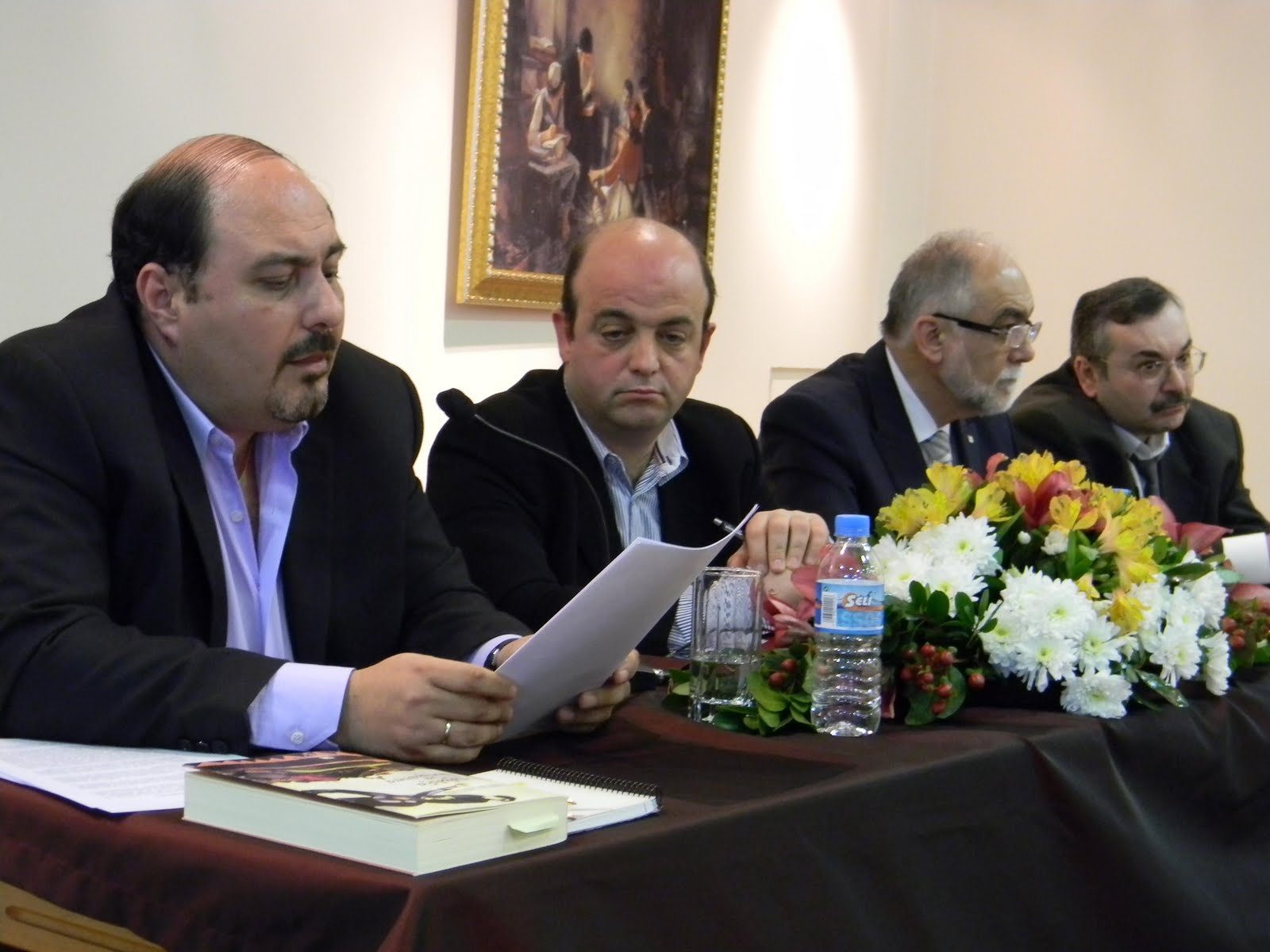
| Θεολογία Διαλεγόμενη - Εκδήλωση στην Κοζάνη |  |  |  |
 Τη Δευτέρα 4 Απριλίου 2011 το περιοδικό ΛΕΙΜΩΝΑΡΙΟΝ, της Ιερ.Μητροπόλεως Σερβίων και Κοζάνης, σε συνεργασία με την ΑΚΑΔΗΜΙΑ ΘΕΟΛΟΓΙΚΩΝ ΣΠΟΥΔΩΝ, της Ιεράς Μητροπόλεως Δημητριάδος, διοργάνωσε ημερίδα με θέμα: Θεολογία διαλεγόμενη - Το έργο και οι εκδόσεις της Ακαδημίας Θεολογικών Σπουδών.
 Στην ημερίδα εισηγήθηκαν οι:
 Ο κ.Αμπατζίδης παρουσίασε τα θέματα «Ορθοδοξία και Νεωτερικότητα» και «Ισλάμ και φονταμενταλισμός- ορθοδοξία και παγκοσμιοποίηση». Ο κ.Αμπατζίδης τόνισε ότι τα θέματα αυτά είναι συνέχεια της εσχατολογικής προβληματικής της Ακαδημίας και οτι ο διάλογος ορθοδοξίας και νεωτερικότητας παραμένει ουσιαστικά ζητούμενο και ένα καίριο ζήτημα σήμερα είναι ο ρόλος της ορθόδοξης χριστιανικής Εκκλησίας στη νεωτερικότητα. Η προσπάθεια της Ακαδημίας για το διάλογο θεολόγων και κοσμικών διανοουμένων και το άνοιγμα της τοπικής Εκκλησίας της Δημητριάδος στη θύραθεν διανόηση αποτελεί μία από τις ελάχιστες προσπάθειες υπέρβασης της αμοιβαίας άγνοιας και καχυποψίας προκειμένου να διερευνηθεί, αν υπάρχει ριζική ασυμβατότητα των δύο μεγεθών (ορθοδοξίας και νεωτερικότητας) ή αν αντίθετα ιστορικές συγκυρίες στάθηκαν εμπόδιο στο διάλογο και τη συνάντησή τους.


| 3-6-2010 |  |  |
| Νεο-πατερική σύνθεση ή «Μετα-πατερική» Θεολογία:  Το αίτημα της θεολογίας της συνάφειας στην Ορθοδοξία Διεθνές Συνέδριο (με ταυτόχρονη μετάφραση στα ελληνικά / αγγλικά) στο Συνεδριακό Θεσσαλίας, Βόλος, 3-6 Ιουνίου 2010 με την παρουσία κορυφαίων Ορθοδόξων Θεολόγων απ' όλο τον κόσμο Η Ακαδημία Θεολογικών Σπουδών σε συνεργασία με το Πρόγραμμα Ορθοδόξων Σπουδών του Fordham University (Νέα Υόρκη), την Έδρα Ορθοδόξου Θεολογίας του Πανεπιστημίου του Münster (Γερμανία) και το Ρουμανικό Ινστιτούτο Διορθοδόξου, Διαχριστιανικού και Διαθρησκειακού Διαλόγου (INTER) Cluj-Napoca οργανώνει διεθνές συνέδριο με θέμα: Νεο-πατερική σύνθεση ή «Μετα-πατερική» Θεολογία: Το αίτημα της θεολογίας της συνάφειας στην Ορθοδοξία. Το συνέδριο αυτό εντάσσεται στο πλαίσιο του φετινού προγράμματος της Ακαδημίας με γενικό θέμα: Η Ορθοδοξία στον 21ο αιώνα. Ο 20ος αιώνας υπήρξε για την Ορθοδοξία μια περίοδος σημαντικών αλλαγών και ανακατατάξεων. Για πρώτη φορά, έπειτα από πολλούς αιώνες, με την αφορμή της οικουμενικής κίνησης και στο πλαίσιο κυρίως της ορθόδοξης διασποράς, η ορθόδοξη θεολογία βγήκε από την εσωστρέφεια και την ομολογιακή της περιχαράκωση ερχόμενη σε διάλογο με τις άλλες μεγάλες χριστιανικές παραδόσεις και με τις προκλήσεις του μοντέρνου κόσμου. Αυτή η ελπιδοφόρα πορεία ανανέωσης της Ορθοδοξίας συνδέθηκε στενά με τη λεγόμενη «νεο-πατερική σύνθεση» και με μεγάλα θεολογικά αναστήματα όπως ο π. Γεώργιος Φλωρόφσκυ, ο Βλαδίμηρος Λόσκι, και τη συμβολή Ελλήνων θεολόγων όπως ο Νίκος Νησιώτης, ο Σάββας Αγουρίδης, ο π. Ιωάννης Ρωμανίδης, ο Σεβ. Μητρπολίτης Περγάμου Ιωάννης Ζηζιούλας, ο Χρήστος Γιανναράς, κ. ά. Η ορθόδοξη θεολογία έχει συχνά χαρακτηρισθεί ως παραδοσιακή, παραπέμποντας έτσι στη βασική πηγή εμπνευσής της και το πλαίσιο διαμόρφωσής της. Πρόκειται για την πλούσια πατερική της παράδοση, η οποία συχνά τείνει να απολυτοποιείται σε ένα είδος μοναδικού, αν όχι και αλάθητου, κριτηρίου αλήθειας και «ορθοδοξίας». Παρατηρείται έτσι στις μέρες μας το φαινόμενο η ορθόδοξη θεολογία να θεολογεί προσκολλημένη σε μεθόδους και αρχές που προϋποθέτουν ένα τελείως διαφορετικό κοσμοείδωλο, όπως αυτό λ.χ. της βυζαντινής εποχής, ενώ η γλώσσα και ο λόγος της συνδέεται σε μεγάλο βαθμό, αν όχι και αποκλειστικά, με τις κατηγορίες σκέψης της ελληνικής φιλοσοφίας και οντολογίας. Σήμερα δεν γίνεται εύκολα αντιληπτό ότι η σπουδαία σε σημασία πατερική παράδοση, δεν υπήρξε ποτέ ένα μονολιθικό, ανιστορικό και αμετάβλητο κατασκέυασμα, αλλά ότι διαρκώς ανακαινιζόταν με τη χάρη του Πνεύματος, προσλάμβάνοντας και αγιάζοντας τα εκάστοτε και εκασταχού νέα πολιτισμικά, κοινωνικά και ιστορικά δεδομένα. Αυτή η δυναμική φαίνεται σήμερα να έχει μάλλον ατονήσει ή και συσκοτισθεί, με αποτέλεσμα η θεολογία να προβάλλει συνήθως ως ένα απηρτισμένο κλειστό σύστημα, έξωθεν ερχόμενο, αν όχι και επιβαλλόμενο, που με τη μεθοδολογία, τη γλώσσα και το λόγο οριστικά και αμετάκλητα ξεπερασμένων εποχών επιχειρεί τάχα να προσφέρει στο σήμερα την «καλή αγγελία» για τη σωτηρία της κτίσης και του ανθρώπου. Οι παραπάνω διαπιστώσεις εισάγουν το κεντρικής σημασίας ερώτημα, για το εάν και κατά πόσο μπορεί η Ορθοδοξία παραμένοντας πιστή στην πλούσια πατερική της παράδοση να διαλεχθεί ή, μάλλον, να σαρκωθεί στον μετανεωτερικό κόσμο του 21ου αιώνα, κατά το πρότυπο του σαρκωνθέντος Κυρίου της, αναλαμβάνοντας έτσι στην πράξη τις θεολογικές, ανθρωπολογικές αλλά και ιστορικές/πολιτισμικές συνέπειες που απορρέουν από το γεγονός της Σάρκωσης. Με άλλα λόγια, το κεντρικό ζήτημα που τίθεται είναι εάν υπάρχει ενδογενώς η δυνατότητα για την ορθόδοξη θεολογία να λειτουργήσει όχι μόνο ως παραδοσιακή αλλά και ως συναφειακή. Το ερώτημα, όμως, αυτό δεν μπορεί να απαντηθεί ούτε εύκολα αλλά ούτε και μονοδιάστατα. Απαιτεί σοβαρή και κυρίως ειλικρινή, χωρίς προκαταλήψεις, εργασία μέσα στους κόλπους της ορθόδοξης θεολογίας, προκειμένου να αναδειχθούν εκ νέου τα στοιχεία εκείνα που συνέβαλαν στη διαμόρφωση της φυσιογνωμίας της πατερικής παράδοσης που για την εποχή της λειτούργησε περισσότερο ως συναφειακή παρά ως παραδοσιακή μορφή θεολογίας. Θα τολμήσει η Εκκλησία να σαρκώσει στο μετανεωτερικό μας κόσμο την αιώνια αλήθεια του Ευαγγελίου, προσλαμβάνοντας κριτικά και δημιουργικά τη σάρκα ακριβώς του μετανεωτερικού κόσμου, και όχι κάποιας μακρινής ή και χιμαιρικής «χριστιανικής» κοινωνίας; Στο Διεθνές Συνέδριο από τις 3 έως τις 6 Ιουνίου στο Βόλο με θέμα: «Νεο-πατερική σύνθεση ή “μετα-πατερική” θεολογία», σύμφωνα με το παρακάτω πρόγραμμα. Στο συνέδριο θα λάβουν μέρος κορυφαίοι ορθόδοξοι θεολόγοι, επίσκοποι, κληρικοί και λαϊκοί, κοσμήτορες και καθηγητέςς ορθοδόξων θεολογικών σχολών απ΄όλο τον κόσμο, που θα λαμπρύνουν με την παρουσία τους την Ακαδημία Θεολογικών Σπουδών, την Μητρόπολη Δημητριάδος και την πόλη του Βόλου. ΠΡΟΓΡΑΜΜΑ ΠΕΜΠΤΗ 3 ΙΟΥΝΙΟΥ 2010 18.00-18.30 Εγγραφή-Παραλαβή φακέλων 18.30-19.00 Έναρξη – Χαιρετισμοί Α΄ Συνεδρία Προεδρεύων: Παντελής Καλαϊτζίδης Συντονιστής της Ακαδημίας Θεολογικών Σπουδών 19.00-19.30 Αρχιεπίσκοπος Βολοκολάμσκ Ιλαρίων Alfeyef, Ορθόδοξη Παράδοση και συναφειακή θεολογία 19.30-20.00 Γεώργιος Μαρτζέλος, Καθηγητής στη Θεολογική Σχολή Α.Π.Θ.,Ο ρόλος της συναφειακής θεολογίας στην Ορθόδοξη παράδοση ΠΑΡΑΣΚΕΥΗ 4 ΙΟΥΝΙΟΥ 2010 Β΄ Συνεδρία Προεδρεύων: George Demacopoulos Αν. Καθηγητής, Συνιδρυτής-Διευθυντής του Προγράμματος Ορθοδόξων Σπουδών Πανεπιστημίου Fordham, Νέα Υόρκη 09.00-09.30 Marcus Plested, Διευθυντής Σπουδών στο Ορθόδοξο Ινστιτούτο του Cambridge, Η εμφάνιση της νεο-πατερικής σύνθεσης: Περιεχόμενο, προκλήσεις και όρια 09.30-10.00 Διακ. Pavel L. Gavrilyuk, Αν. Καθηγητής στο Παν/μιο S. Thomas, Επισκέπτης Καθηγητής στη Θεολογική Σχολή του Harvard, Ο Χριστιανικός Ελληνισμός» του π. Γεωργίου Φλωρόφσκυ: μια κριτική αξιολόγηση 10.00-10.30 John Behr, Κοσμήτωρ του Θεολογικού Σεμιναρίου Αγίου Βλαδιμήρου, Νέα Υόρκη, Επέκεινα της Νεο-πατερικής σύνθεσης Γ΄ Συνεδρία Προεδρεύουσα: Monica Herghelegiu Επ. Καθηγήτρια στο Πανεπιστήμιο του Tübingen 12.00-12.30 π. Vladan Pericic, Καθηγητής Πατρολογίας, πρ. Κοσμήτωρ της Θεολογικής Σχολής του Παν/μίου Βελιγραδίου, Λειτουργική θεολογία και συναφειακή θεολογία την πατερική εποχή και σήμερα 12.30-13.00 Tamara Grdzelidze, Υπεύθυνη Προγράμματος του Τμήματος “Πίστις και Τάξις”, Παγκόσμιο Συμβούλιο Εκκλησιών, Η συναφειακή διάσταση των Πατέρων της Εκκλησίας στο πλαίσιο της οικουμενικής κίνησης Δ΄ Συνεδρία Προεδρεύουσα: Ελένη Κασσελούρη-Χατζηβασιλειάδη, Διδάσκουσα στο Ελληνικό Ανοικτό Παν/μιο, Επιστημονικός συνεργάτις της Ακαδημίας Θεολογικών Σπουδών, 15.00-15.30 Daniel Ayuch, Αν. Καθηγητής στο Ινστιτούτο Ορθόδοξης Θεολογίας St. John of Damascus του Παν/μίου του Balamand, (Λίβανος), Η σχέση μεταξύ βιβλικών και θεολογικών επιστημών 15.30-16.00 John Fotopoulos, Αν. Καθηγητής στο Τμήμα Θρησκευτικών Σπουδών στο Κολέγιο Saint Mary του Παν/μίου Notre Dame, Η.Π.Α, Η ορθόδοξη θεολογία και η ιστορικο-κριτική μέθοδος 16.00-16.30 Monica Herghelegiu, Επ. Καθηγήτρια στο Παν/μιο του Tübingen, Η ιεραρχική δομή της Εκκλησίας. Κανονικά και βιβλικά θεμέλια μέσα από την προοπτική της συναφειακής θεολογίας Ε΄ Συνεδρία Προεδρεύων: Θεοφ. Επίσκοπος Δυτικής Αμερικής κ. Μάξιμος Εκκλησία της Σερβίας Καθηγητής Θεολογικής Σχολής Πανεπιστημίου Βελιγραδίου 18.00-18.30 George Demacopoulos, Αν. Καθηγητής, Συνιδρυτής-Διευθυντής του Προγράμματος Ορθοδόξων Σπουδών στο Παν/μιο Fordham (Νέα Υόρκη), Ιστορία, μετα-αποικιακή θεωρία και κάποιες νέες δυνατότητες για την ανάκτηση του παρελθόντος της θεολογίας 18.30-19.00 Alexei V. Nesteruk, Ερευνητής-Λέκτορας στο Τμήμα Μαθηματικών του Πανεπιστημίου του Portsmouth, Μ. Βρετανία, Επισκέπτης Καθηγητής στο St. Andrews Biblical Theological Institute, Μόσχα, Ορθοδοξία στον αιώνα της επιστήμης: Από τη Νεο-πατερική σύνθεση στη ριζοσπαστική θεολογική δέμευση ΣΑΒΒΑΤΟ 5 ΙΟΥΝΙΟΥ 2010 ΣΤ’ Συνεδρία Προεδρεύων: Βασίλειος Μακρίδης Καθηγητής Κοινωνιολογίας Ορθόδοξου Χριστιανισμού Πανεπιστημίου Erfurt, Γερμανία 09.00-09.30 Assaad Elias Kattan, Διευθυντής του Κέντρου Θρησκευτικών Σπουδών και Καθηγητής στην έδρα Ορθόδοξης Θεολογίας στο Παν/μιο του Münster, Η επανεξέταση της Ουσιοκρατίας. Ο μύθος μιας μη ερμηνευτικής προσέγγισης στην Ορθόδοξη παράδοση 09.30-10.00 Διάκ. John Panteleimon Manousakis, Επ. Καθηγητής Φιλοσοφίας στο Κολλέγιο Τιμίου Σταυρού, Worcester (Η.Π.Α), Θεός: ον και γεγονός. Στο μεταίχμιο μεταξύ θεολογίας και οντολογίας 10.00-10.30 π. Δημήτριος Μπαθρέλλος, Δρ. King’s College, Επισκέπτης Καθηγητής στο Ορθόδοξο Ινστιτούτο του Cambridge, εφημέριος Ι.Ναού Αγιάς Σοφίας Ντράφι Ι. Μητροπόλεως Μεσογαίας, Η συστηματική θεολογία ως μια νέα μορφή ορθόδοξης θεολογίας; Ζ΄ Συνεδρία Προεδρεύων: Aristotle Papanikolaou Αν. Καθηγητής, Συνιδρυτής-Διευθυντής του Προγράμματος Ορθοδόξων Σπουδών Πανεπιστημίου Fordham, Νέα Υόρκη 12.00-12.30 Μητροπολίτης Περγάμου Ιωάννης Ζηζιούλας, Ακαδημαϊκός (Οικουμενικό Πατριαρχείο), Η επικαιρότητα και διαχρονικότητα της Νεο-πατερικής σύνθεσης 12.30-13.00 π. Andrew Louth, Καθηγητής Πατρολογίας Πανεπιστημίου Durham, Μ. Βρετανία, Η αυθεντία των Πατέρων της Εκκλησίας στην προοπτική μιας «μετα-πατερικής ορθόδοξης θεολογίας» Η’ Συνεδρία Προεδρεύων: Κωνσταντίνος Δεληκωνσταντής Καθηγητής Θεολογικής Σχολής Πανεπιστημίου Αθηνών 15.00-15.30 Michail Neamtu, Διδάκτωρ Θεολογίας, Senior Fellow, CADI/Eleutheria (Ρουμανία, Η εθνο-θεολογία ως μια ιδιαίτερη περίπτωση της συναφειακής θεολογίας 15.30-16.00 Radu Preda, Αν. Καθηγητής Κοινωνικής Θεολογίας στο Παν/μιο Babes-Bolyai, (Ρουμανία), Ορθόδοξη κοινωνική θεολογία και συναφειακή θεολογία 16.00-16.30 Aristotle Papanikolaou, Αν. Καθηγητής, Συνιδρυτής-Διευθυντής του προγράμματος Ορθοδόξων Σπουδών στο Παν/μιο Fordham (Νέα Υόρκη), Ορθόδοξος φιλελευθερισμός: Η πολιτική θεολογία μετά την αυτοκρατορική εποχή Θ΄ Συνεδρία Προεδρεύουσα: Tamara Grdzelidze Υπεύθυνη Προγράμματος του Τμήματος “Πίστις και Τάξις”, Παγκόσμιο Συμβούλιο Εκκλησιών, 18.00-18.30 Peter Bouteneff, Αν. Καθηγητής στο Θεολογικό Σεμινάριο Αγίου Βλαδιμήρου, Νέα Υόρκη , Θεολογίες της απελευθέρωσης: Προκλήσεις για τη σύγχρονη Ορθοδοξία από την πλευρά των θεολογιών της συνάφειας; 18.30-19.00 Ελένη Κασσελούρη-Χατζηβασιλειάδη, Διδάσκουσα στο Ελληνικό Ανοικτό Παν/μιο, Επιστημονικός συνεργάτις της Ακαδημίας Θεολογικών Σπουδών, Η Φεμινιστική θεολογία και η συναφειακότητά της: Πρόκληση ή ευκαιρία για την Ορθόδοξη Θεολογία; ΚΥΡΙΑΚΗ 6 ΙΟΥΝΙΟΥ 2010 Θεία Λειτουργία στον Ι. Ναό Αναλήψεως του Χριστού Βόλου Αναχώρηση λεωφορείων για Συνεδριακό Θεσσαλίας: 10.45 Ι’ Συνεδρία Προεδρεύων: Assaad Elias Kattan Διευθυντής του Κέντρου Θρησκευτικών Σπουδών και Καθηγητής στην έδρα Ορθόδοξης Θεολογίας στο Παν/μιο του Münster 11.30-12.00 π. Εμμανουήλ Κλάψης, Καθηγητής της Ελληνορθόδοξης Θεολογικής Σχολής Τιμίου Σταυρού Βοστώνης, Ευαγγέλιο και πολιτισμοί. Προς μια θεολογία των θρησκειών 12.00-12.30 Θανάσης Ν. Παπαθανασίου, Δρ. Θεολογίας, Αρχισυντάκτης του περιοδικού Σύναξη, Η ιεραποστολή ως πρόκληση για την ορθόδοξη συναφειακή θεολογία 12.30-13.00 Παντελής Καλαϊτζίδης, Δρ. Θεολογίας, Συντονιστής της Ακαδημίας Θεολογικών Σπουδών, Προς μια μετα-πατερική θεολογία; |


